Making infrastructure work is about making it easy for customers
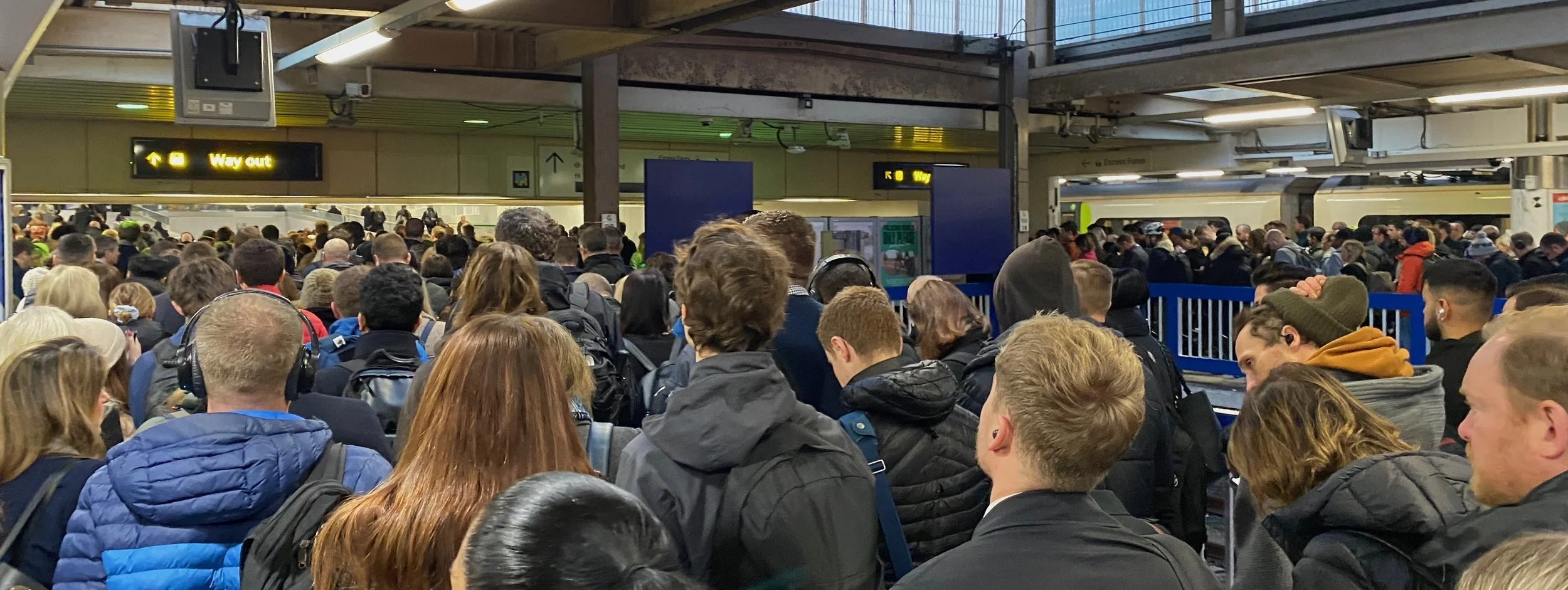
Making it easy for customers is hard but drives value and customer advocacy
Once a journey is made to work; the next challenge is to make it easy to use. This drives recommendation and advocacy on social media or when customers are with friends or family. Whislt price is a key driver, whether someone chooses to fly, take a train, or cycle also comes down to how easy that option feels, not just whether it can get them there. That has a real consequence for infrastructure providers, because “it works” and “it's easy” are not the same thing, and most organisations stop at the first one, think it’s complete and move on. In reality, they’ve just started.
‘Working’ isn’t the same as ‘easy’.
Steve Jobs, from Apple, talked about the development curve for software: getting something to work is only the first step to ensure the customer is willing to adopt and use it. Most organisations don't complete that curve. They get part of a service to a functional, but still in a clunky level, declare it done, and move on — without ever closing the gap between “it works” and “it's easy.” That gap is exactly where customers make their decision about whether to use it again, or not.
Ownership is important to getting this right.
The deeper issue is that organisations tend to focus on whatever is easy to deliver, or whatever sits within their own remit. But customers don't experience a journey in those neat pieces - they experience one continuous, end-to-end trip. That mismatch creates a structural problem: there is often no single organisation actually responsible for that whole journey, with the authority to integrate and manage all the different components and providers it depends on.
There are exceptions, and they're instructive. Airports that function as transfer hubs have a direct commercial interest in making connections work, because a smooth transfer keeps the passenger, and the airline's revenue, moving through the system. British Airways has a clear incentive to make sure passengers arriving on an incoming flight can move easily across the airport to catch their connecting flight — there's a very obvious commercial benefit to getting that right.
Confidence and Trust
One train operator made a telling observation: a passenger facing a journey with a connection will drive instead, unless they're genuinely confident the connection will work. That single word - confident - turns out to be the crux of it. It's also, encouragingly, something that can actually be investigated and addressed directly, rather than treated as a vague feeling nobody can act on.
Elsewhere in public transport, that kind of integration is far more rare, largely because it's unusual for any single organisation to clearly benefit from doing the work of joining things up. Transport for London is an exception, but even they are also sometimes fragmented. Integration takes real, sustained effort, and if the payoff is diffuse or accrues to someone else, there's little incentive for any one party to drive it.
The question nobody’s really answered
This points to a more fundamental question that doesn't yet have a clear answer: if someone is travelling from A to D, why would they choose public transport over the car at all? What are the actual barriers, and what specifically would make someone say “yes, I'll get the train”? There seems little solid evidence explaining why people make that choice one way or the other — and until that's understood, efforts to improve the “easy” side of the experience will be challenging.
What needs to change
Two things follow from this. First, there needs to be a single organisation responsible for integrating the system end to end — that might be a council, a combined authority, or some equivalent body — and its job has to include getting to the bottom of why people choose not to use public transport, rather than assuming the answer is already known.
Second, that understanding won't come from a workshop. What actually makes the ordinary and the basic so difficult to get right rarely matches what you'd predict on a whiteboard — the “brilliant basics” are often the hardest things to nail precisely because they seem too obvious to interrogate properly. Real-world trials matter here: you have to try things out, test them with customers, and progressively work through why something isn't landing, rather than assuming a good idea in a meeting room will translate cleanly into the real world.
Making it easy
Ease of use isn't a finishing touch bolted onto infrastructure once the hard engineering is done - it's the actual measure of whether the infrastructure works at all, from the customer's point of view. Closing the gap between functional and easy means someone has to own the whole journey, ask the uncomfortable question of why people might choose a car or public transport and be willing to see it as something which requires continuous testing, learning and improvement rather than a ‘waterfall’ solution.